Current project
The Dutch Global Age: Worldly Images and Images of the World in Netherlandish Art (funded by NWO-Vici, 2023-2028)
The art of the seventeenth century (what used to be called the “Golden Age”) is arguably the Netherlands’ most successful cultural export on the world stage. Featured in major collections in Europe, the Americas, Asia, and Africa, it attracts visitors whenever the major names are displayed. Scholars and museum publics generally recognize it as one of two main schools of Early Modern European art, the other being the Italian Renaissance. Purportedly, its accurate representation of contemporary life tied it closely to the rise of the urban bourgeoisie in Antwerp and Amsterdam. The Dutch Global Age breaks new ground by replacing this “national school” model with a global one: the spectacular growth of the art market cannot be understood without taking into account the contemporary maritime expansion. Many artworks resulted from, and contributed to, the extraordinary interconnectedness of the Low Countries with the rest of the world: from the Islamic scarf of Vermeer’s Girl with Pearl Earring to Rembrandt’s Chinese porcelain. What was the role of the visual arts in fostering the new views Netherlanders held of the world and of themselves that came with an extending geographical horizon? The nature and accessibility of this visual culture set the situation in the Low Countries apart from the preceding Portuguese and Spanish encounter with the Indies. For the first time, a variety of people from different social strata could acquire different kinds of intellectual and material knowledge of foreign worlds, on a larger scale and at lower prices than was previously possible. Some of this imagery also circulated outside Europe.
Although in the past few decades, many individual works and masters have been studied in a global light (notably in the Rijksmuseum’s 2015 exhibition Asia in Amsterdam), as yet there lacks a comprehensive and analytical approach of Global Netherlandish Art. This program will explore artistic exchanges between the Low Countries and the wider world, understood here as the East and West Indies, in an integrated fashion, addressing their intellectual, material, and economic dimensions.
The program will demonstrate that the central position of the Low Countries in global exchange rested on intricate trade and artisanal networks rooted in the Northern and Southern Provinces (present-day Netherlands and Belgium). Older scholars have tended to emphasize the uniqueness of the Dutch Republic and its colonial project, as separate from the Southern Provinces that were politically part of the Spanish Habsburg world. We, by contrast, recognize that North and South were engaged in the same struggle with globalization processes. The Habsburg Empire’s worldwide overstretch, which led to increased taxation at home, inspired the founding of the Dutch Republic and its rivalling trade with the East and West Indies. The Low Countries’ position thus straddled the major political, religious, and cultural fault lines of the age (Catholic/Protestant, Republican/absolutist) and made it into a crucible of incipient global consciousness. The complementary global imaginaries of Catholic and Protestant missions and of the Houses of Habsburg and Orange offer inroads for productive comparative analysis. Furthermore, the logistics of exchange reveal that the (largely Protestant) trading companies and the (mostly Catholic) missionary companies often played supportive rather than antagonistic roles.
Drawing back the timeline of the global imaginary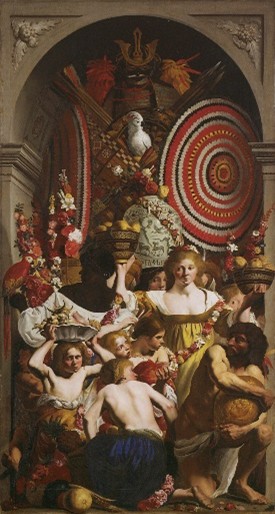
This program intends the global imaginary as the consciousness of one’s position on a spherical world without a geographical centre, consisting of different, albeit interconnected civilizations. Recent studies (Cosgrove 2008, Lazier 2011) have highlighted how visual images contributed to this awareness. As Cosgrove (2001: 10) argues, the globe is comprehended only through its representation, and “representations have agency in shaping understanding and further action in the world”. Thus the famous Earthrise photo (1968) confronted viewers with the global condition in a more profound manner than did any other report from the lunar mission. The Dutch Global Age will likewise emphasize the importance of visual images, but it will break new ground by drawing back the timeline. The program will also develop a broader conceptualization of the global imaginary, as mediated by the exchange of material culture in worldwide networks as well as by diverging, sometimes antagonistic ideologies of global comprehensiveness.
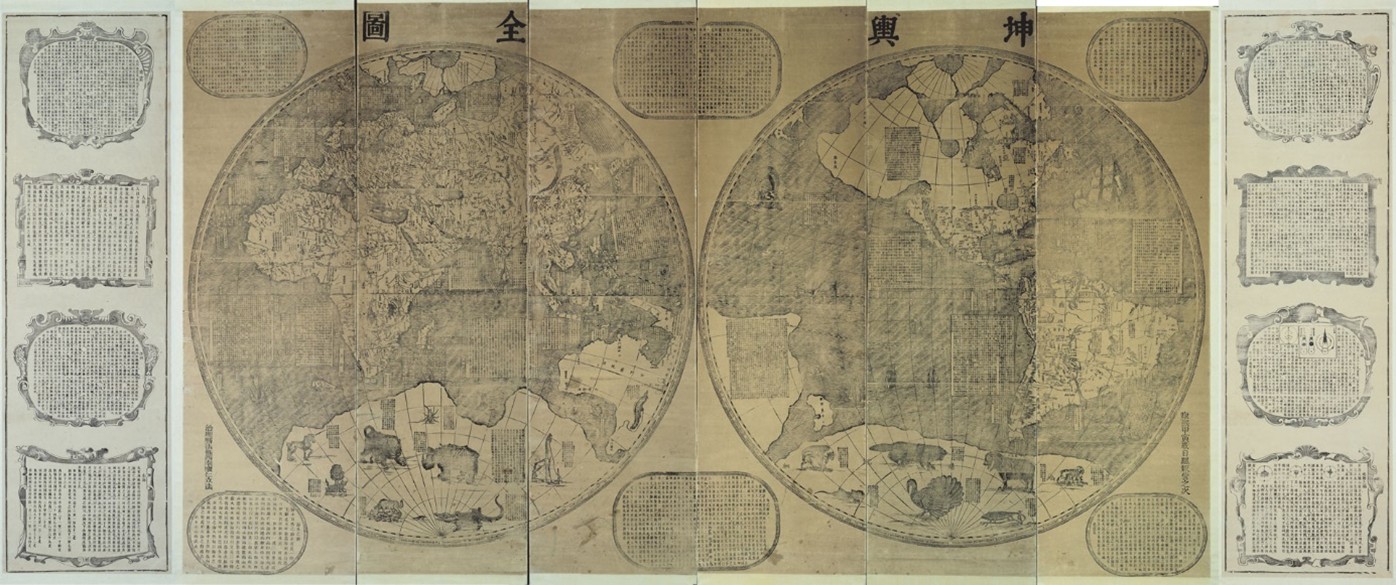
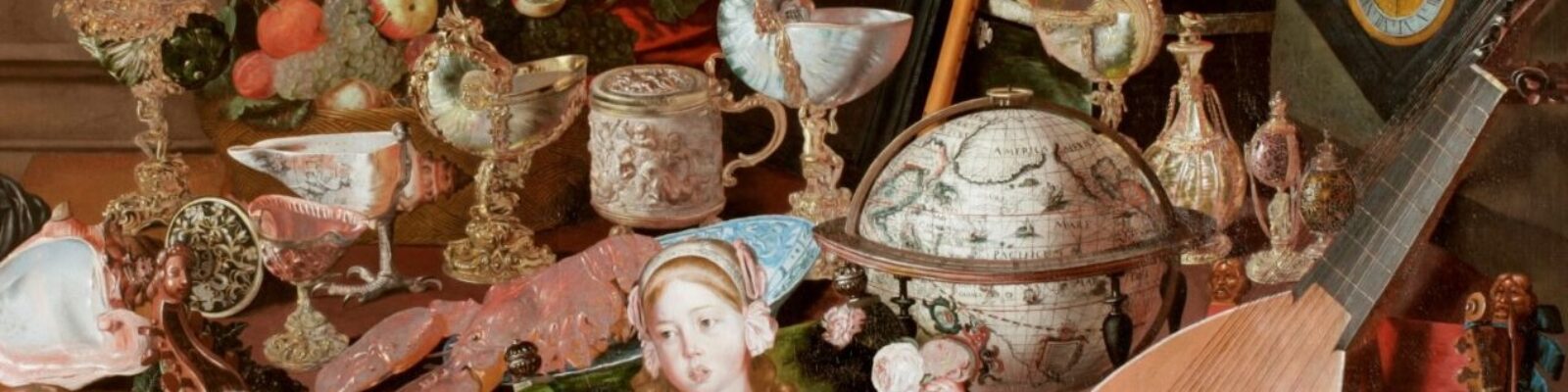
We will demonstrate how, in the seventeenth century, the global imaginary was established by paintings, prints, maps, and globes, which were available to different social strata on a hitherto unseen scale. While neither the spherical nature of the Earth nor the existence of ancient civilizations on other continents were new knowledge, an unprecedented number of individuals were confronted with their global condition, mostly through material culture and visual images produced in the Low Countries. It was, for instance, a world map made in Antwerp (Abraham Ortelius’s Theatrum orbis terrarum, 1570) that the first Japanese ambassadors to Rome admired in 1585 and took back home to be copied on lacquer screens. Likewise, the Dutch travelogue by Johan Nieuhof (1665) contained the first eye-witness images of East Asia in Europe, and the “first landscape painter of the Americas” was the itinerant artist Frans Post, born in Haarlem.
The rise of markets for images of the globe, artefacts from the different continents, and works produced for global publics demonstrate that, by the seventeenth century, for the first time the need to come to terms with globality was felt in different layers of society, in low and high culture, within and outside Europe. When material culture was traded on a global scale, it penetrated to lower class households in the Netherlands (Chinese porcelain imported by the Dutch East India Company) and inspired local imitations (Delftware ceramics), which were sometimes exported to Asia and the Americas. People who never travelled were allowed hands-on contact with the foreign. At the same time in intellectual culture, the global condition posed challenges to traditional religious, political, scholarly, and economic convictions. It is evident that these discussions were partly inspired by, and partly expressed in, the production and reception of artefacts of increasingly complex iconographies, materials, and trajectories. By focusing on ideological aspects, the program will draw back the timeline of intellectual-historical studies (Steger 2008, Bell 2013) that have explored the global imaginary in relation to different political ideas since the early 19th century. These studies highlighted that “a shared sense of a thickening world community” accompanied the rise of communication technologies and the decline of nation-based political ideologies (from communism to global jihad). The Dutch Global Age will argue that a similar variety of ideological conceptualizations of the global was already evident in the 17th century.
By that time, the Low Countries, through the VOC and WIC and the rivalling Habsburg projects in worldwide trade, had developed into one of the world’s most globally connected areas. Its geographical vantage point had radically shifted: from a marginal but fixed position centered on Jerusalem and Rome, to a node in dynamic commercial networks that connected Europe to the New World, East Asia, Australia, and the Arctic. Different ideologies of global interconnectedness developed on the basis of this shifted perspective. We will address how such nascent ideologies can be connected to iconographies of the global. These ranged from the imperialist ambitions of the Habsburg Kings, Dutch Stadhouders, and Mughal and Qing rulers to the rivalling yet structurally similar projects aimed at global conversion by Catholics and Protestants. A second research strand will explore how European attempts at understanding artistic materials and techniques from Asia and the Americas, and their appreciation of the ingenuity of peoples beyond Europe, reflected the ideal of a global knowledge society. Thirdly, we will explore the rise of global art trade in relation to the capitalist economies of Antwerp and Amsterdam and the new ideology of free trade. This latter concept was famously devised by Hugo Grotius in the early seventeenth century as a legal argument in defense of the Dutch capture of a cargo of Chinese porcelain. Finally, connecting our historical case studies with present-day concerns, we will study curatorial efforts around the globe to include Netherlandish art in regard to the ideology of world heritage.
The Global as Actor’s Category
In recent decades, two dimensions have characterized the “global turn” in art history. The first is globality as a scale of historical process: e.g., the worldwide trade in artefacts and materials and the exchange of styles and motifs (Brook 2007). The second is the global as analytical category: e.g., comparing and contrasting perspectives on art and art his-tory from different continents (Clunas 2013). The proposed third dimension is the global as an actor’s category: the new conception the Early Moderns themselves (mostly within but also outside Europe) had of the globe and their own position on it. The visual arts provide an essential addition to this third approach, in light of the Early Modern understanding of images as means of communication more fundamental, and more universally understood, than language. This understanding is evident in the frantic Dutch discussions about the possibility of global pictographic writing (Weststeijn 2011). As the Catholic mission proved, Netherlandish prints were effective in communicating with peoples in Asia and the Americas even when their languages were unknown (Massing 2017, Natif 2018). Likewise, the blue-and-white aesthetic of Chinese ceramics that the Dutch imitated and exported to Brazil, Africa, and back to East Asia could be conceived as visual lingua franca that was universally appreciated (Finlay 2010). The mixture of elements in some of artefacts has been described as characteristic of a “global style” (Snodin 2009). This provides evidence for how the micro scale of object-based analysis, which is usually associated with art history, can be related to the macro-scale of worldwide patterns of exchange, and how the three dimensions of the global turn (historical scale, analysis, and actor’s category) can be calibrated.
Subprojects
Ain Taha: Making Sense: Material and Knowledge Encounters in 17th– century Netherlandish Art Objects
Nico Ganbold: Global Encounters: Production, Reception, and Circulation of the Image of People from Beyond Europe by Travelling Netherlandish Artists
Margaux Shraiman: Curious Creatures and Strange Specimens: Picturing Global Ecologies in Netherlandish Art
Laia Anguix: How and Why Have Paintings from the 17th-century Netherlands Been Collected and Displayed in Museums in Asia, Africa, and Latin America in the Period 1975-2023?
Meet the team and find out more about the individual projects.