
Teaching
Team members of the Dutch Global Age project are involved in teaching this course, accessible to all UU BA students (Block 2, November-January):
Global Visions in Art and Art History (KU2V18001)
This course explores the histories of global connectedness in art and architecture from different regions in historical perspective, taking into consideration commonalities as well as the aesthetics of difference.
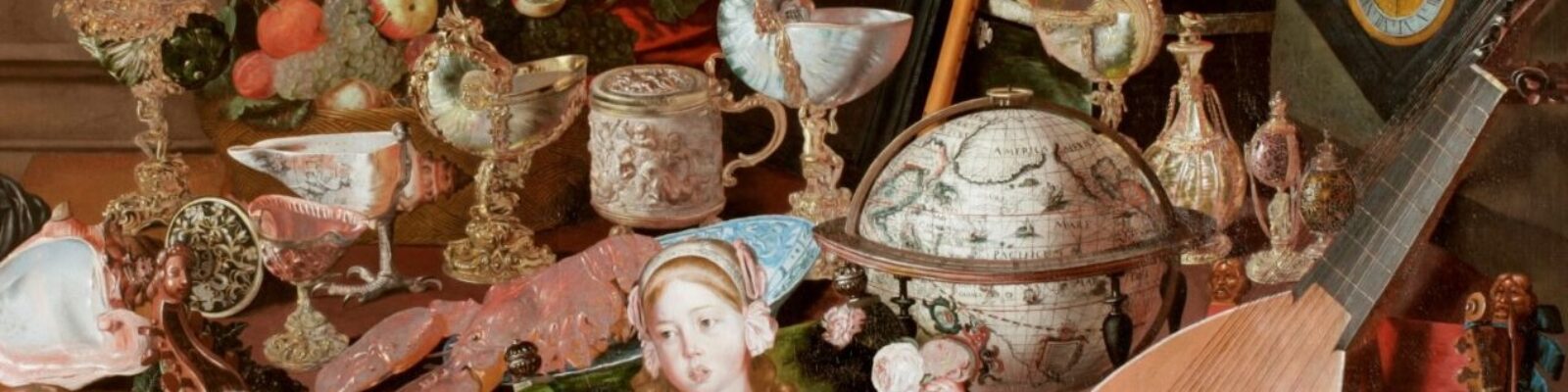
We start with Europe at the end of the fifteenth century, when new maritime routes created the conditions for a truly globalized world. Artworks moved across cultural zones and into new contexts, resulting in innovative materials, styles, and themes. They also became agents of cultural interaction, shaping encounters and related cultures of knowledge and consumption. In this period, furthermore, the groundwork was laid for the different European ’empires’ that were characterized by imperialist and extractivist attitudes towards regions beyond Europe. As we move from the Early Modern period (c. 1400-1800) into the Modern (from c. 1800 onward), the course critically evaluates how artistic ‘encounters’ were often not of a peaceful nature but were shaped by the power imbalance of colonialism and slavery.
We will consider how the rise of the discipline of Western art history, as rooted in European texts and institutions, coincided with sharply increasing imperialism as we focus on the concepts of colonialism and orientalism and their role in transnational interactions along with their afterlives. Finally, the course will consider the interrelations between contemporary art and globalization. On the one hand, the contemporary period presents a re-thinking of art history, challenging Eurocentrism by expanding its potential scope to include different forms of artistic production from various geographies around the world. Does global art merely imply broadening the field of case studies, or does art history need to question and address its deep-rooted disciplinary assumptions against the currents of modernity and coloniality? What challenges, then, does the contemporary period present for the discipline of art history? How can art history contribute to the search for terms and categories that bridge different cultures, geographies, and histories?
During this course you will explore key texts and artworks in relation to the rich collections and galleries of the Netherlands and beyond that testify to this history of intensive global exchange.
- Explore how movement, migration, and transcultural exchange influenced artists and artworks, from the 1500s to the present;
- Examine commonalities and differences in artworks from different cultural traditions;
- Reconsider the canon of art history in the light of global and postcolonial perspectives;
- Evaluate critical terms and categories and imagine new possibilities for art history;
- Learn to speak, think, and write intelligently about global and postcolonial issues in art history and your own engagement in the field.